Water Pressure Testing & PRV Replacement
Pressure checks, pressure-reducing valves, and expansion tanks for homes across Snohomish County
Stollwerck Plumbing & Sewer measures building water pressure on service calls across Everett, Mukilteo, Edmonds, and Lynnwood, then installs or replaces a pressure-reducing valve when the reading runs high. The plumbing code requires a regulator above 80 psi. The highest we have gauged on an Everett home is 140 psi.
What We Do
PSI Rating Check on Building
We put a gauge on an outdoor hose bib and read static pressure before diagnosing anything else. It is the single most common line item in our job records, it is free on a service call, and it explains a surprising number of complaints that arrive described as something else entirely.
Pressure-Reducing Valve Replacement
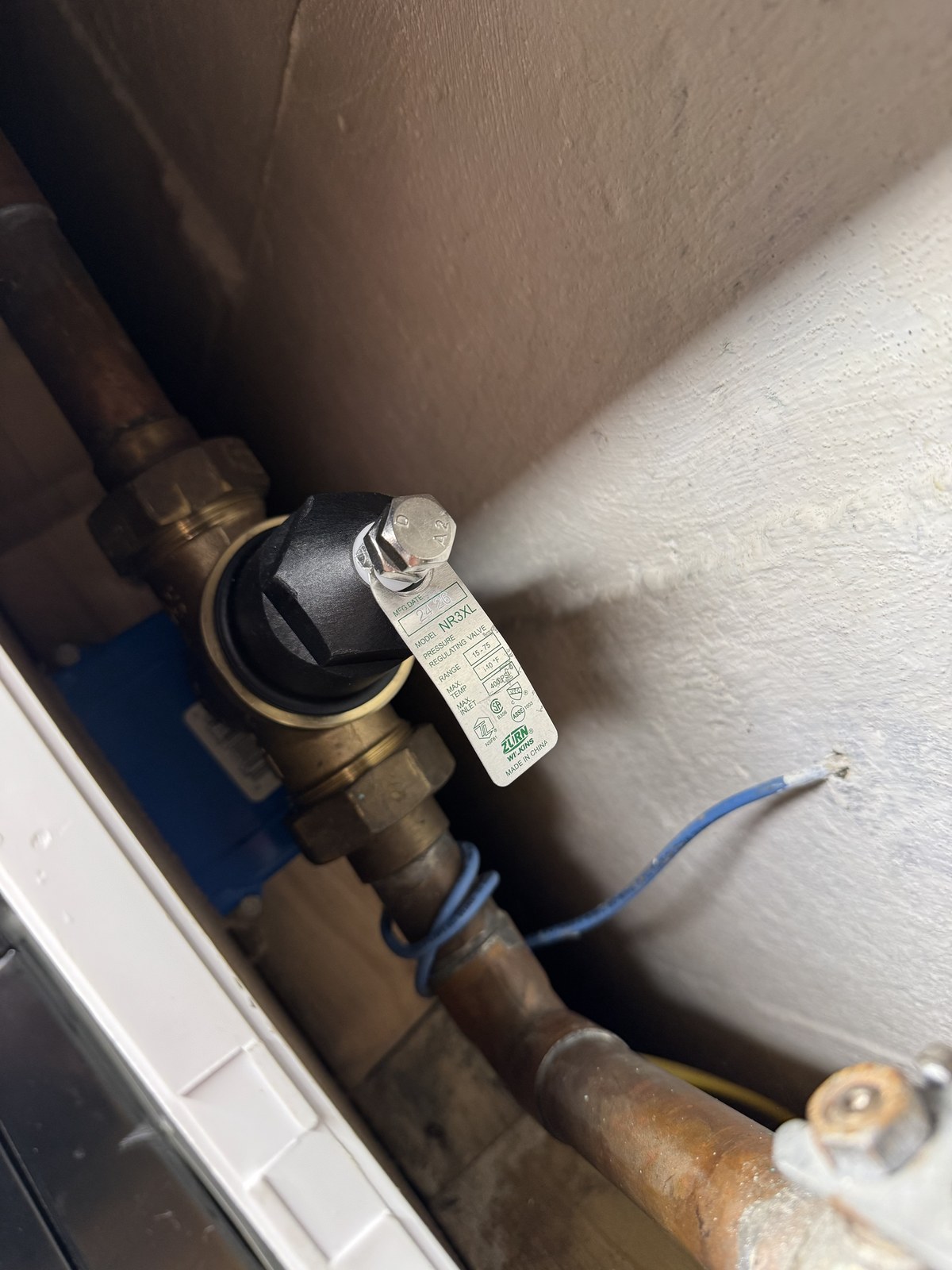
A PRV is the brass valve just past your main shutoff that steps street pressure down to something your fixtures can live with. We replace failed and drifted PRVs in 3/4", 1" and 1.25", set the outlet pressure, and confirm it at a fixture before we pack up.
Thermal Expansion Tanks
On a closed system — anything with a PRV or a backflow preventer — water heated in the tank has nowhere to expand except into your pipes. An expansion tank absorbs it. We test the air charge, re-pressurize tanks that have drifted, and replace the ones whose bladder has given out.
Pressure-Related Leak Diagnosis
Pinhole leaks, a weeping T&P valve, dripping angle stops and split supply lines are frequently pressure problems wearing a leak’s clothing. We gauge first so we fix the cause instead of chasing the symptom around the house.
Water Hammer and Pipe Noise
Pipes that bang when the washing machine or dishwasher shuts its valve usually mean high pressure, a missing arrestor, or both. We diagnose the noise, correct the pressure, and install hammer arrestors where they actually belong.
Main Shutoff Replacement
A PRV is only as good as the valve upstream of it. When we find a main shutoff that no longer closes cleanly, we replace it in the same visit — rather than leave you with a regulator you cannot isolate.
Real Pressure Work in Everett
A homeowner on Colby Avenue in Everett called us in April 2026 because the pressure in the master shower had jumped a few days earlier. Chase gauged two separate hose bibs and read roughly 50 psi at each, then ran fixtures inside the house and watched for the drop a supply restriction would have caused. There wasn't one.
The incoming pressure was fine. The thermal expansion tank on the water heater was completely full of water — the bladder had given out, or it was never charged with air when it went in. Chase brought it up to 55 psi to match the system, replaced the tank, and checked the house for leaks before leaving.
That job is a fair illustration of why we gauge before we quote. A pressure complaint in a house that already has a working PRV is very often an expansion problem instead, and replacing the PRV would have cost four times as much and fixed nothing.
What water pressure is normal in Everett and Mukilteo?
Most homes here should sit between 50 and 80 psi. In our own job records we have gauged Everett houses anywhere from 50 psi up to 140 psi, and Mukilteo houses from 52 psi to 95 psi. Anything above 80 psi is over the code limit and should be regulated.
Those are readings off our own gauge, not an industry average, and the spread is the interesting part — because Everett and Mukilteo drink exactly the same water. It comes from Spada Lake on the upper Sultan River, about thirty miles east, is filtered and distributed by Everett, and is wholesaled onward to Mukilteo Water & Wastewater District, Alderwood, and Silver Lake. That one system serves more than three-quarters of Snohomish County.
What differs is where your house sits inside the pressure zone. The 140 psi reading in our log came from a home near Shore Avenue in south Everett, down at the low end of its zone; we replaced the PRV and brought the house to 60 psi. A house on Taylor Drive gauged 110 psi — that owner declined a PRV, so we set the expansion tank to 110 to match what was coming in, and noted it. Meanwhile the Colby Avenue job above read 50.
Mukilteo runs a narrower band because its terrain is less extreme, but it is not flat either. A house on 3rd Street in Old Town gauged 78 psi; one on Villa Monte Drive read 79; a place on 63rd Place W started at 95. Same utility, same reservoir, very different loads on your fixtures.
Signs Your Pressure Needs Attention
Pressure That Changed on Its Own
Water pressure does not improve by itself. If a shower suddenly feels stronger, or the whole house feels weaker, something in the system moved — usually a PRV drifting out of adjustment or an expansion tank that has stopped absorbing.
A Weeping or Dripping T&P Valve
The temperature-and-pressure relief valve on your water heater is a safety device, not a nuisance. If it is releasing water, the system is telling you pressure is climbing past what it should. Do not cap it — call.
Banging Pipes
Water hammer when an appliance valve snaps shut is a pressure symptom. At 90 or 100 psi, every closing valve sends a shock wave through the supply lines that the pipe straps and fittings have to absorb.
Fixtures That Keep Failing
Supply lines, angle stops, hose bibs, fill valves and faucet cartridges are all built for a pressure range. Above it they chatter, weep and wear out early. If you are replacing them more often than feels reasonable, gauge the house before replacing another one.
How We Handle Pressure Work
1. Gauge It
Static reading at an outdoor hose bib first. Then we run fixtures inside and watch the gauge, which separates a high-pressure problem from a restriction or a supply-side problem.
2. Find the Actual Cause
High static pressure, a failed PRV, a waterlogged expansion tank and a partly closed main all feel similar from inside the house. They are not the same repair, and we do not guess between them.
3. Fix and Set It
New PRVs get set to a target and verified at a fixture, not just at the valve. We normally land between 60 and 70 psi — low enough to protect fixtures, high enough that showers on an upper floor still feel right.
4. Check the Rest of the System
High pressure leaves evidence. Before we leave we look at the water heater, the T&P line, the angle stops and any fixture the customer mentioned, so a new valve is not undone by a worn supply line.
Water Pressure & PRV FAQ
What should my home water pressure be?
Between 50 and 80 psi. The plumbing code caps residential static pressure at 80 psi and requires a pressure-reducing valve above that. Below about 45 psi, showers and simultaneous fixture use start to feel weak. We generally set a new PRV between 60 and 70 psi.
Why did my water pressure suddenly change?
Because something in the system moved — a PRV drifting out of adjustment, an expansion tank that has waterlogged and stopped absorbing, a partly closed main shutoff, or utility work upstream. Pressure does not change on its own without a cause, so a sudden shift is worth gauging rather than living with.
How do I know if my PRV has failed?
Gauge the house. A failed PRV shows up as static pressure well above its setting, pressure that climbs while nobody is using water, or a reading that swings between morning and evening. A PRV that is fifteen years old and reading over 80 psi is not adjustable — it is finished.
How much does it cost to replace a PRV in Everett or Mukilteo?
A straight 3/4" or 1" swap is the job we do most often, and we quote it before any work starts. A 1.25" valve costs more again. What moves the price is size and access — the worst one in our records was buried in a yard and cost significantly more than a standard swap because it had to be dug up first.
Do I need an expansion tank as well as a PRV?
Usually yes. A PRV makes your plumbing a closed system, so heated water can no longer push back toward the street and needs somewhere to expand. Most homes with a PRV need a working expansion tank on the water heater, and we check the charge whenever we are on site.
Is high water pressure actually damaging anything?
Yes, continuously. Above 80 psi, supply lines, angle stops, fill valves, hose bibs and water heater fittings all wear faster, and every valve that closes sends a harder shock through the pipe. The damage is gradual, which is why it usually gets blamed on the fixture that failed first.
Why Everett and Mukilteo Homeowners Call Us for Pressure Work
We Gauge Before We Quote
The PSI check costs nothing on a service call and it is the first thing we do. We would rather find an expansion tank problem than sell you a valve you did not need.
Every Plumber on Our Team Is Licensed
We do not use subcontractors. The person who reads your gauge is a licensed plumber employed by this company, working under Washington license STOLLPL780CJ, and we carry insurance above the state mandate.
One-Year Guarantee
Every job carries a full one-year guarantee on our workmanship. The industry norm is ninety days.
Local to This Water System
Our office is in Mukilteo, so Everett, Edmonds and Lynnwood are short runs — and after enough gauge readings we know which parts of this system run hot.
Not Sure What Your Pressure Is Doing?
Call the Mukilteo office and we will put a gauge on it.