
Where pipes actually freeze in our houses, what to do the night the temperature drops, and what to do if one freezes anyway, drawn from the calls behind our own advice
Pipes in heated rooms almost never freeze here. The ones that do run through cold places: crawl spaces, garages, outside walls, outbuildings and the hose bibs on them. Insulate those runs before winter and take the hoses off, and when a hard freeze comes, keep the house warm, open the cabinets on outside walls and let one faucet drip.
How often does it freeze around here?
Not often, but enough. NOAA's 1991–2020 normals for Paine Field in Everett show about 29 nights a year at or below freezing, most of them from December through February, about two days a year that never climb above freezing, and only one or two nights at 20 degrees or colder. Those long, cold stretches are when exposed pipes freeze.
A single frosty night rarely hurts a pipe inside a heated house. What does the damage is a run of cold days and nights, and a pipe that was already sitting somewhere cold when they arrived.
1. Find the pipes that live in the cold
Water lines in a heated room are rarely the problem. The ones at risk run through a crawl space, a garage, an attic, an exterior wall or an outbuilding. Washington's version of the plumbing code says pipe in those places needs protection from freezing where it is necessary, and that hot and cold water pipes outside the conditioned space must be insulated to meet the state energy code.
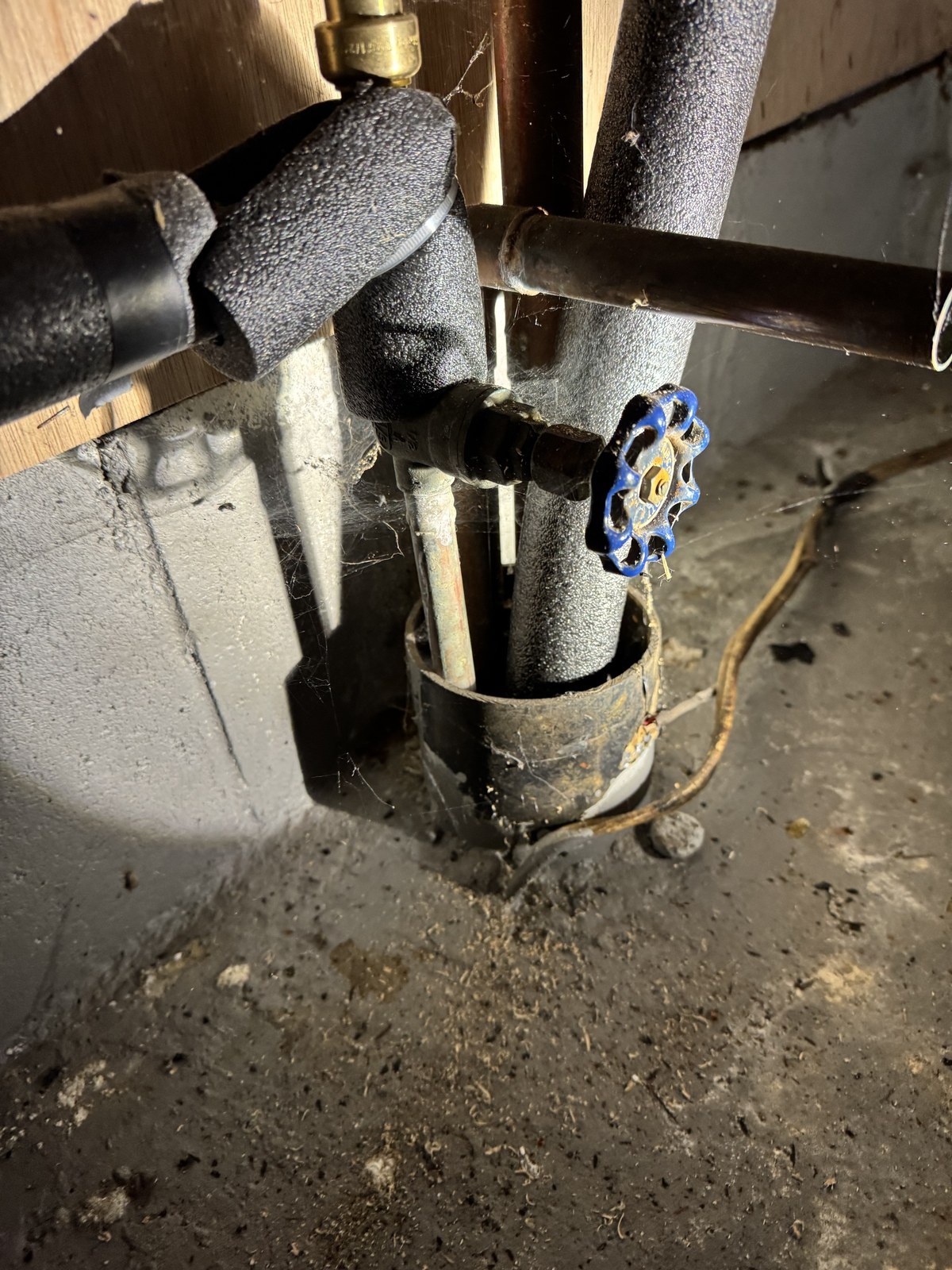
In September Chase looked at a house in View Ridge-Madison, in Everett, whose laundry sits in a room outside the house. The owner wanted a quote for a new hot line from the crawl space out to it, and the plan included insulating both lines along their run to protect them from the cold.
2. Insulate them before the cold, and look for wet pipe
Foam sleeves are inexpensive and quick to fit, and Snohomish County PUD's winter list includes insulating hot and cold pipes in unheated areas such as the garage, crawl space or attic. Do it in the fall, while getting under the house is still pleasant.
Insulation also keeps a cold pipe dry. In late December 2025 a homeowner in Boulevard Bluffs, in Everett, noticed moisture along a short run of three-quarter-inch copper under the house that feeds a toilet and a sink upstairs and the laundry below. By the time Logan and Connor arrived it was dry, with no sign of a leak or damage on the wood around it. They judged it most likely condensation, since the run sits right beside heat ducting that had been working harder in the cold, and recommended insulating as much of that pipe as could be reached.
3. Take the hoses off and drain what you can
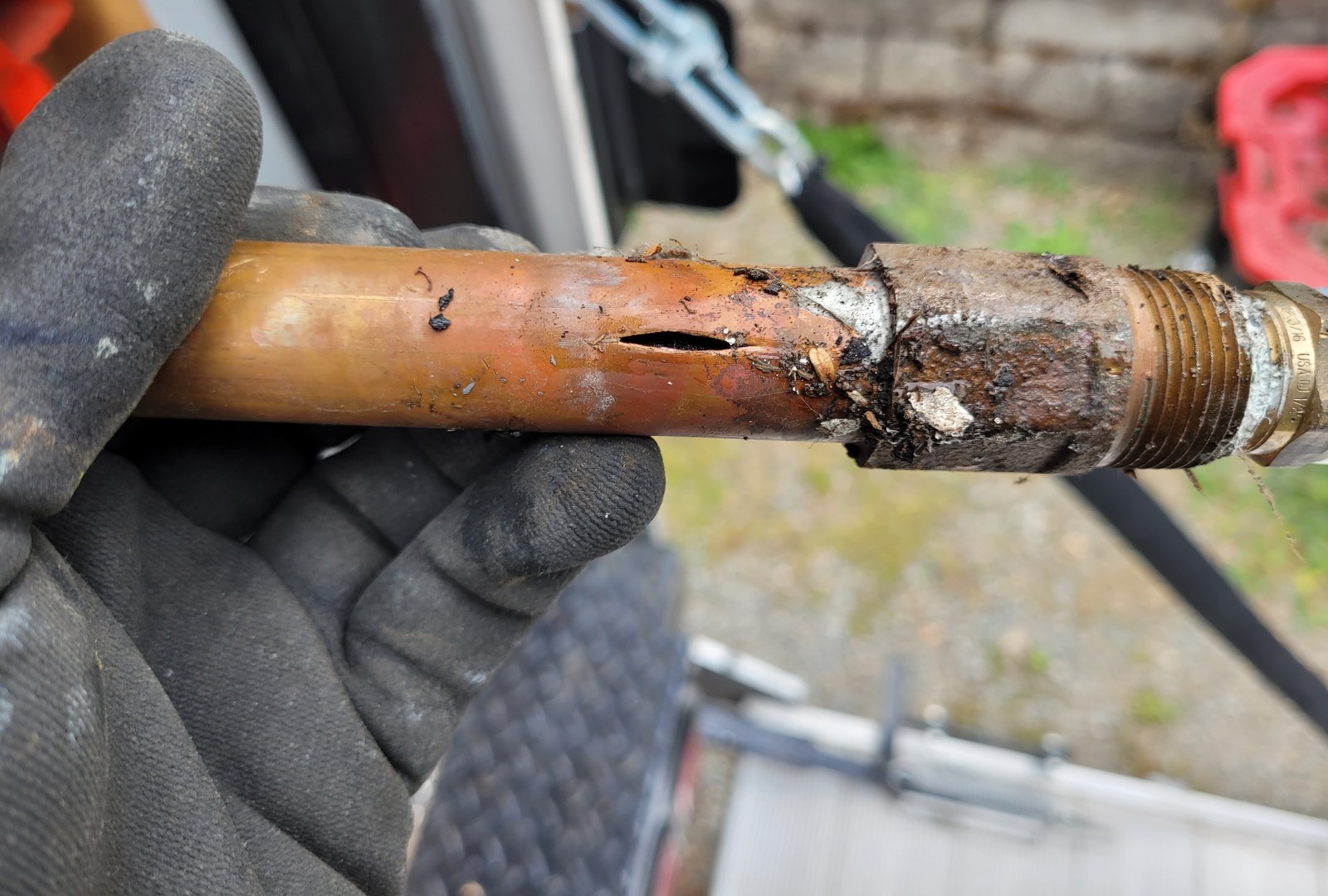
A hose left connected keeps water in a hose bib through a freeze, frost-free bib or not, and a split barrel stays hidden until the bib is next used. In October Willie and Logan opened a basement ceiling in Delta to replace a frost-free bib that leaked only when someone turned it on; its barrel had split in a freeze, as the photo above shows. Our fall plumbing checklist covers shutting off and draining hose bibs, and our hose bib page covers replacements. The PUD adds two more jobs: winterize irrigation systems, and insulate backflow devices and outside faucets with newspaper, rags or other insulating material.
4. The night a hard freeze is forecast
Keep the house heated and the garage door closed. Open the cabinet doors under sinks on outside walls so the room's heat reaches the pipes, and keep a steady drip of cold water running at one inside faucet, which is what the PUD recommends. If you will be away for several days, set the heat to at least 55 degrees, or shut the water off and drain the lines, turning the water heater off before you drain.
5. If a pipe freezes anyway
Assume it may already be split and will leak as it thaws, so find the main shutoff before you do anything else. The PUD's way to thaw a pipe is to wrap it in rags and pour hot water over them, then rewrap it in dry insulation, and it warns never to use an open flame or an electrical device. If there is no water anywhere in the house, the freeze may be where the line enters the house or at the meter. Snohomish County PUD tells its water customers that its crews cannot fix frozen pipes between the meter and the house or inside it, so that call goes to a licensed plumber.
Know where your shutoff is before the cold arrives. North of Edmonds in September, Chase searched a house and its crawl space for a whole-house shutoff and could not find one, which leaves the meter in the front yard as the only way to stop the water. A house like that should have a shutoff added before winter, not during a freeze.
6. Second homes and empty houses
A house nobody is living in needs more than a dripping faucet. Our Whidbey second-home winterization guide covers draining a house, booster pumps and tankless heaters for places left empty through the winter.
Frozen Pipe Questions
Which faucet should I let drip during a freeze?
One on an outside wall, or the one farthest from where your water comes in, running cold at a steady drip. Snohomish County PUD recommends a steady cold-water drip at an inside faucet during freezing weather. Moving water is slower to freeze, and a slow drip also gives the pressure somewhere to go if ice starts to form.
Can I thaw a frozen pipe with a hair dryer or a torch?
Not with a torch or any open flame, and the PUD advises against electrical devices too. Its method is to wrap the frozen section in rags and pour hot water over them, then rewrap it in dry insulation. Find your main shutoff first, because a frozen pipe may already be split and will leak as it thaws.
Why is a pipe under my house wet when nothing is leaking?
In winter it may be condensation. In December 2025 a Boulevard Bluffs homeowner found a copper run wet along its whole visible length, but it was dry by the time Logan and Connor arrived, nothing around it was damaged, and it sits beside heat ducting that had been running more in the cold. Insulating the pipe was their recommendation.
Do pipes in my garage really need insulation?
If water lines run through an unheated garage, yes. Washington's plumbing code requires hot and cold water pipes outside the conditioned space to be insulated to the state energy code, and the PUD names the garage first among the unheated places to insulate. A garage door left open on a freezing night makes the risk worse.
Our Recommendation
Treat the cold places in the house as the problem, not the weather. An afternoon in the fall with a flashlight and a bag of foam sleeves, under the house and in the garage, does more than anything you can do on the night of a freeze. Then find the main shutoff and turn it once. If you cannot find it, or it will not move, call us before the cold arrives rather than after.
Ready Before the Next Cold Snap
Call the office and tell us whether your house sits over a crawl space, a basement or a slab, and where the water lines run through the garage. One visit can sleeve the exposed runs, check the main shutoff and replace a hose bib that has already split.
Call 425-374-3909 · Request a Quote
Related: fall plumbing checklist · winterizing a Whidbey second home · hose bib repair and replacement · hose bib replacement in Everett · water leak repair · how to find your main water shutoff · summer hose bib failures in Mukilteo