
Seven jobs for October, in the order the weather makes them matter, with the calls from the past year that show why each one is on the list
The first hard freeze around Puget Sound usually arrives in late November or December, and most of the winter plumbing calls we take could have been prevented in October. This is the checklist we would run on our own houses, in the order the weather makes it matter, with the jobs from the past year that show why.
1. Outdoor faucets, this weekend
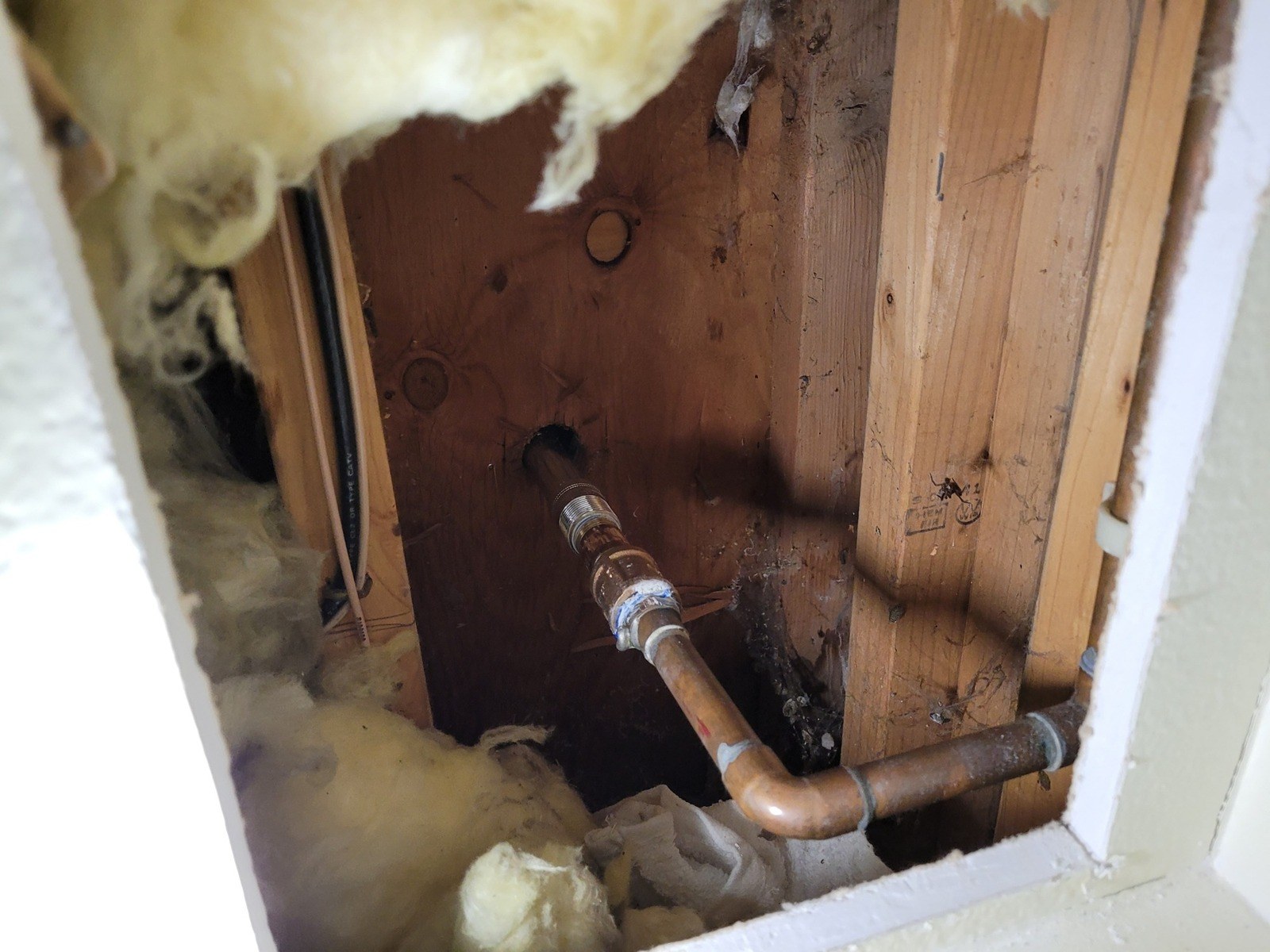
Take every hose off, because a connected hose holds water inside the bib and defeats even a frost-free one. If the bib has a shutoff inside the house, close it and leave the outside handle open so the barrel drains. Then think back to summer: a bib that dripped, sprayed from the wall or needed two hands to close is the one that will split in January. In October 2025 Logan replaced a hose bib at an Edmonds house that had already broken in a freeze. The split was behind the wall, as it usually is, so he opened the basement drywall, ran new copper through the rim and set a new bib from inside, on the same visit as the house’s new 75-gallon power-vent water heater. That is the right order: before the cold, not after.
Our summer hose bib post explains why a bib that froze last winter waits until June to show itself. October is when you act on it, and the hose bib page covers what a replacement involves.
2. Your water heater, before it works hardest
Incoming water gets colder through the winter, so a tank that kept up in August runs short in December, and that is when a heater on its last element gives up. The signs are showers that end sooner than they used to, a slow recovery and rumbling from the tank. In February Carlos and Logan were called to a low-boy electric heater in an Old Town Mukilteo condo that was running out of hot water quickly; the lower element was dead, so they drained the tank, rebuilt it with new elements and thermostats, refilled and purged it, and tested the elements before the power went back on. A heater past its twelfth year or rusting at the base is a different conversation, better had in October than in a cold garage in January. Our water heater page covers repair against replacement.
3. Pressure and the expansion tank
A house’s water pressure is rarely the number its owner assumes; it changes with the hills, the time of day and the state of the pressure-reducing valve. High pressure wears out fill valves, supply lines and the heater’s relief valve, and the heating season makes it worse, because every time the tank heats a load of water it expands, and without a working expansion tank that expansion goes straight up the gauge. In September Logan, Chase and Willie went to a Mill Creek house where the homeowner had measured between 80 and 100 psi at the hose bibs and could hear the pipes rattle. They installed a one-inch pressure-reducing valve in the stand-up crawl space, set it to 70 psi, and added an expansion tank to a two-year-old heater that had been running without one. Our PRV questions post shows how to check your own pressure, and the water pressure page explains the valve.
4. The crawl space and the main shutoff
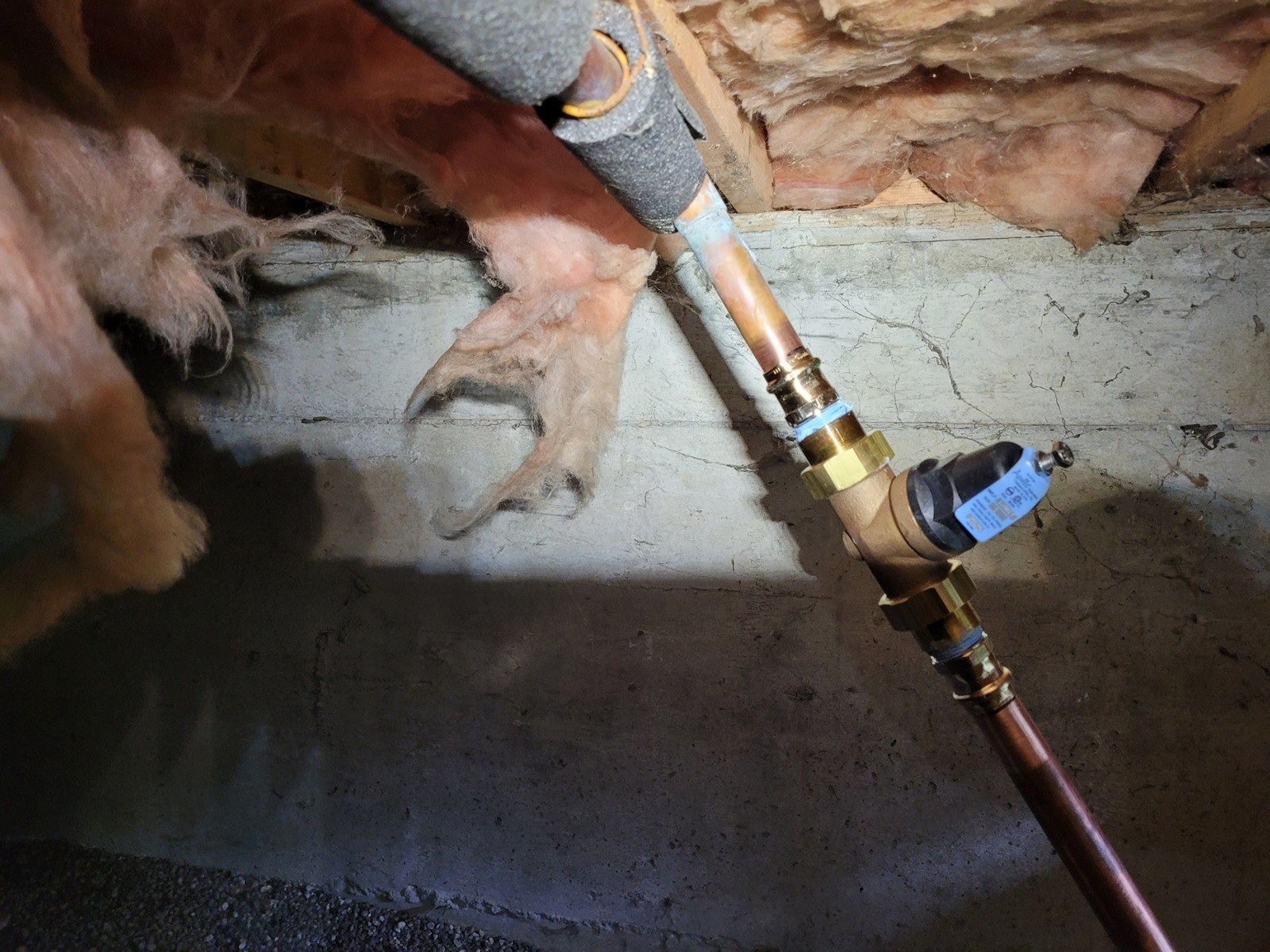
Before the rains, get a flashlight into the crawl space and look for three things: standing water or wet insulation, supply lines lying on the dirt or running bare along the foundation, and the main shutoff. Bare lines get a foam sleeve, and the shutoff gets turned, gently, so you know it works before the night you need it. In December Connor and Logan were under a north Everett house in a four-foot crawl space where a soldered elbow on the main was leaking beside the shutoff; they cut out the section, rebuilt it and pressurized the house to check. In November a Mukilteo homeowner had us replace an old plastic main shutoff with a new one-inch valve and add an expansion tank and shutoff at the water heater, the kind of job that makes every later emergency shorter. Our guide to finding the main water shutoff is worth five minutes this month.
5. Sump pumps, downspouts and the rains
Here, fall is a rain problem before it is a freeze problem. A sump pump that has sat quiet all summer needs proving before November: in August Logan and Willie serviced the pump at a Mukilteo house, checked the backup battery, cleaned the chamber, cleared the impeller and tested it, and traced rusty hot water in the hall bath to an angle stop on an old galvanized nipple while they were there. Downspout drains clog with the same leaves that fill the gutters: in June Chase cleared a Mukilteo downspout drain that backed up in heavy rain, breaking clogs about twenty and thirty feet out and running a hose into it for twenty minutes to prove it. Clean the gutters, then run water down each downspout and watch where it goes. Our drain cleaning page covers yard and downspout drains too.
6. Second homes on Whidbey, and any house you are not in
If a house will sit empty for weeks this winter, leave the heat on low, shut the main and open a tap to take the pressure off the lines, drain the hose bibs, and ask someone nearby to look in after a freeze. A leak detector that closes the main valve on its own is the one gadget we recommend without hesitation for a house nobody is watching. Our crews are on Whidbey every week, in Langley, Freeland and Clinton, and the saddest spring calls are the ones where a small leak ran for a month.
7. Fixtures you rarely use
A guest bathroom that sits unused lets its traps dry out, and a dry trap is a sewer smell. Run water in every sink, tub and shower once a month, pour a bucket into any floor drain, and listen to the spare toilet for the quiet refill that means its flapper is leaking. A running toilet nobody hears is the most expensive thing on this list.
Fall Plumbing Questions
When does it get cold enough here to burst a pipe?
Not often, but most winters. Puget Sound winters are mild, yet nearly every one brings a stretch with nights in the teens or low twenties, and that is all an exposed line or a hose bib with a hose still attached needs. The damage often waits for the thaw to show, as the Edmonds bib did.
Should I turn my water heater off if I leave for the winter?
Turn it down rather than off, unless the house will be unheated. Most tanks have a vacation setting that keeps the water warm without heating a full tank nobody is using, and a gas heater’s pilot stays lit. If the heat will be off, drain the heater and the lines, because a frozen tank is a replaced tank.
My hose bib is frost-free. Do I still need to do anything?
Yes: take the hose off. A frost-free bib keeps its valve a foot or more inside the warm wall, but a connected hose traps water in the barrel, and that water freezes and splits the bib from the inside. Disconnect every hose in October, store it, and open the bib once to make sure the barrel drains.
What is the one thing to do first?
Find your main shutoff and make sure it turns. Every winter emergency is shorter when the water can be stopped in a minute, and a valve that has not moved in twenty years may not close, which is how a Mukilteo homeowner came to replace an old plastic main shutoff before the cold. Our shutoff guide shows you how.
Our Recommendation
Do the outdoor faucets this weekend, because they cost nothing and they are what fails first. Book the water heater check and the pressure reading in October, while a routine visit can still be scheduled within the week, and have the crawl space looked at on the same trip. Then spend five minutes finding your shutoff. The houses we visit in January with no damage are the ones that did these things in the fall.
One Visit Covers the List
Call the office and tell us the age of the house and whether it has a crawl space, a basement or a slab. One visit covers the pressure reading, the water heater, the hose bibs and a look under the house.
Call 425-374-3909 · Request a Quote
Related: hose bib repair and replacement · water heaters · water pressure and PRVs · water leak repair · drain cleaning · summer hose bib failures in Mukilteo · water pressure questions · how to find your main shutoff
Stollwerck Plumbing & Sewer · Mukilteo, WA · WA License #STOLLPL780CJ · One-year guarantee on every job