
Toilet Repair and Replacement in Everett, WA
Running, rocking and slow-flushing toilets rebuilt, reset or replaced from Rucker Hill to Silver Lake, by licensed plumbers minutes from the city line
In Everett’s south-end plats the call is usually a tank that runs or will not fill, rebuilt and dye tested in one visit. In the old north end it is often a toilet rocking on a tired flange or backing up on cast iron, and we fix that instead of selling a toilet. Same-day service from our shop in Mukilteo.
Real Toilet Work in Everett
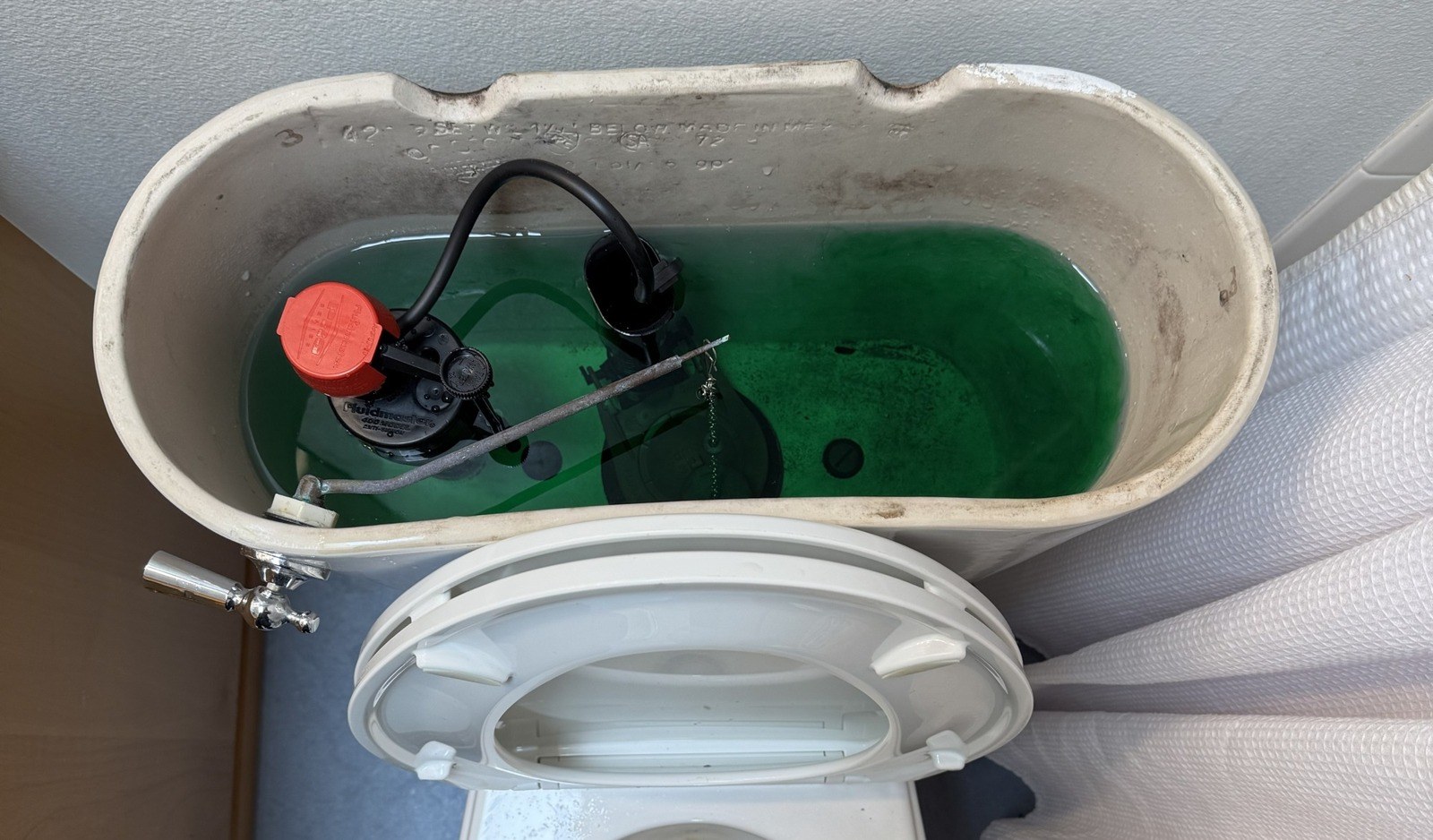
In May 2026 Chase spent a morning at a Boulevard Bluffs house with a list: two tubs, a shower and a vanity that drained slowly, and a toilet that was not working properly. The toilet came first. It was a 1.6-gallon American Standard two-piece, and he rebuilt the tank with a new fill valve and flapper, set the chain and the float, then put green dye in the tank and left it for ten minutes. No color reached the bowl, so the flush valve was holding. He then cabled each slow drain in turn and ran water through every one while he worked on the next, and because nothing smelled of sewer on the day, he suggested a smoke test rather than guess at the odor the family had noticed.
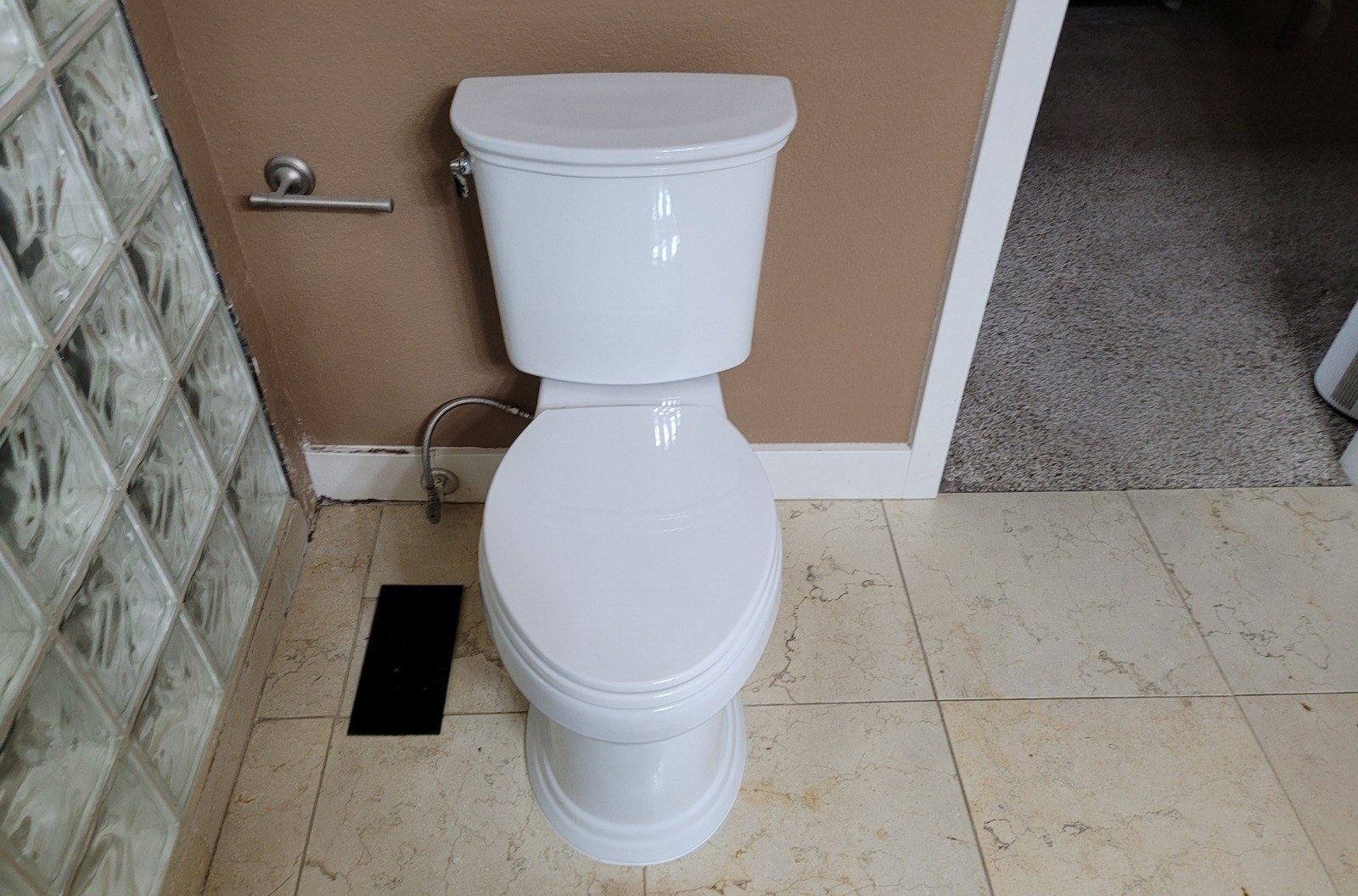
In March, at another Boulevard Bluffs house, Carlos and Logan pulled the master and hallway toilets and set two skirted toilets the homeowner had bought, the kind fastened from inside the bowl with concealed bolts. Each was flushed several times with the floor watched for water before the bases were sealed.
The other calls on this page are typical of the city. In August Chase rebuilt a two-piece at a house on the west side near the Mukilteo line and ran a ten-minute dye test before checking the stop. The summer before, Logan pulled an upstairs hall toilet in Boulevard Bluffs, retrieved a piece of a foam-dart toy from the trap and reset it on a new seal. In December Connor and Logan set a one-piece smart toilet a homeowner had ordered on a stop and stub-out they had built on an earlier visit. And in September, at a south-end house with a crawl space, Chase rebuilt the drain line under a toilet from the tee to a new flange.
What We Do for Everett Toilets
Tank Rebuilds, Then the Dye Test
A toilet that runs, refills on its own, fills slowly or will not fill gets a new fill valve, a new flapper or canister seal and, where it needs one, a new flush-valve gasket, with the water level set against the overflow. Then the dye goes in, and the rebuild is finished when the bowl stays clear.
Pull-and-Reset on a New Seal
A toilet that rocks, weeps at the base or stains the ceiling below comes off the floor. We look at the flange and the subfloor before anything goes back, set it on a new seal with new bolts, flush it repeatedly and seal the base.
Replacement, Including Right-Height and Skirted Models
When a toilet is cracked, decades old or the wrong size for the room, we replace it with one we supply or one you chose. Right-height bowls sit taller than the fixtures they replace, and skirted and one-piece designs mount with hidden hardware, so a replacement is measured before the old toilet comes out.
Flanges, Drain Lines and Clogs an Auger Cannot Reach
A closet auger reaches about six feet and clears most toilet clogs in minutes; when it finds nothing and the toilet still backs up, the problem is below the flange, and we say so. In Everett that often means rebuilding the drain line itself. At the south-end house in September, Chase found an earlier repair had left a fitting that never fully seated into the flange, so he cut the copper drain back to the tee, rebuilt it in plastic with a transition band, raised the flange on plywood to sit level with the floor, set a new right-height toilet and flushed it a dozen times.
Angle Stops and Supply Lines
The shutoff behind the toilet is often the oldest valve in the house, and in the north end it may be threaded onto galvanized pipe. We replace stops that will not close and supply lines that have gone stiff, with the care an old galvanized stub needs. Our post on galvanized pipe in north Everett explains why.
Everett-Specific Considerations
Rucker Hill, Northwest Everett, Riverside and Bayside: Flanges on Cast Iron
The grid north of 41st Street went up between about 1900 and 1930, and a toilet in one of those houses sits on a cast-iron closet bend, often with a lead bend under the flange and a fir subfloor under both. When one of those toilets rocks, the wax ring is rarely the whole story: the flange has lifted, the lead has split or the floor has gone soft. We pull the toilet and look before we quote, and we measure the rough-in before anyone orders a replacement, because pre-war bathrooms are not always the modern twelve inches.
Boulevard Bluffs, Harborview and Pinehurst: The Crawl-Space Plats
The plats above Mukilteo Boulevard and along the bluff filled in from the 1950s to the 1970s, mostly on crawl spaces, which is good news for a toilet drain problem because the line is reachable from below, and it is why the September rebuild was a one-day job. Some of these houses carry copper drain lines, a premium material in their day, and after sixty years they can leak at the fittings.
Silver Lake, Eastmont and the Newer South End
The subdivisions east of I-5 and around Silver Lake date from the 1980s onward, with plastic flanges and tank parts that are standard across brands. A running toilet here is almost always a rebuild, and the bigger risk is an upstairs bathroom over a finished room, where a weeping base shows up as a ceiling stain.
Everett’s Water and Pressure
The City delivers its own water from Spada Lake in the Sultan Basin, and it is soft, so the parts that wear in an Everett tank are the rubber and plastic ones rather than scale. Pressure varies with the hills from one neighborhood to the next, and a house running high wears out fill valves early, so when the reading is high we talk about a pressure-reducing valve before a third fill valve.
Permits: What the Code Exempts and What the City Issues
Under the Uniform Plumbing Code that Washington cities enforce, clearing a stoppage, resetting a toilet and repairing a leaking fixture need no permit. Replacing a fixture or rebuilding pipe is new work, and in Everett that permit comes from the City’s Permit Services. We pull it when the job calls for one and tell you when it does not.
Roots in the Line Under the Toilet
In July Chase was called to a basement toilet near the Mukilteo line that flushed poorly while every other drain in the house ran fine. An auger found nothing, and the toilet, a builder-grade model jammed against the wall of a ten-inch rough-in, was replaced with a ten-inch American Standard. The backup stayed with that one line, so he pulled the new toilet and sent the camera down: roots three to four feet below the flange, in cast iron under the slab. A cable broke through, the root cutter could not, and the honest answer was a short dig. A new toilet was never going to fix it, and we said so.
How We Repair a Toilet in Everett
Look at the Whole Bathroom
If the toilet is the reason for the call we still ask what else is slow, because one trip can fix four drains and a toilet, as it did in May.
Test Before We Price
Dye in the tank, a look at the base and the flange, and a pressure reading when the symptoms point that way. Diagnosis is part of the visit, not an extra line.
Fix the Right Thing
Most tanks are rebuilt, most base leaks are reset on a new seal, worn-out toilets are replaced, and when the fault is in the drain we say so and show you the camera footage.
Flush It Until We Are Sure
Five to a dozen test flushes, every joint checked with the water on, the base sealed and the seal left to cure before the toilet goes back into service.
Toilet Repair FAQ for Everett
Do I need a permit from the City of Everett to replace or reset a toilet?
Not for a reset or a repair. The plumbing code Washington enforces exempts clearing a stoppage, removing and reinstalling a toilet and repairing a leaking fixture, provided no pipe or valve is replaced. Replacing the toilet or rebuilding its drain is new work, and that permit comes from Everett’s Permit Services. We pull it when the job needs one.
My house on Rucker Hill was built in the 1920s and the toilet rocks. Is it the floor or the flange?
Usually the flange. A pre-war Everett toilet sits on a cast-iron bend with a lead or brass flange that lifts, cracks or pulls its screws out of a fir subfloor softened by years of leaks. We pull the toilet, look at the flange and the wood, and say whether it needs a new flange, a floor repair or a reset.
The basement toilet in my south Everett house backs up, but nothing else in the house does. Is it the toilet or the sewer?
If an auger finds nothing and the other drains run clear, it is the line under that toilet. At a house near the Mukilteo line the camera found roots in the cast iron three feet below the basement flange, and only a short dig would fix it. We camera the line before recommending anything, and show you the footage.
What is a ten-inch rough-in, and why does it matter in an older Everett house?
The rough-in is the distance from the finished wall to the center of the closet bolts. Most new toilets are built for twelve inches, but some Everett bathrooms built before the 1960s have ten. Put a twelve-inch toilet on a ten-inch rough-in and the tank hits the wall and the lid will not close, as we found in July.
Can you install a toilet I bought myself, including a skirted or smart model?
Yes. Bring the box and we handle the rest: measuring the rough-in, replacing a tired stop, building a new water stub-out where a smart model needs one, setting the concealed bolts on a skirted bowl, and flushing until the floor stays dry. We set two skirted toilets and a smart one-piece in Boulevard Bluffs in the past year.
Serving Everett From Mukilteo
Our shop is on 5th Street in Old Town Mukilteo, which puts Boulevard Bluffs about ten minutes away along Mukilteo Boulevard, downtown and the north end about twenty minutes up the Speedway and Broadway, and Silver Lake a similar run on Highway 526 and I-5. Everett is our second home market, so there is usually a truck on that side of the line, and a running or overflowing toilet is normally seen the same day.
Why Everett Homeowners Choose Us
Licensed Plumbers on Our Own Crew
Every person we send is a licensed plumber who works for us, not a contractor, which matters when a tank rebuild turns into opening a floor or a crawl space.
We Tell You When the Toilet Is Not the Problem
At the basement toilet in July the new fixture was not the fix, the sewer under the slab was, and the homeowner heard that from us with the camera footage to show it.
Licensed, Insured and Guaranteed for a Year
WA License #STOLLPL780CJ, insurance above the state minimum, and a one-year guarantee on every repair and installation, toilets included.
A Toilet That Runs, Rocks or Will Not Flush
Call the office and tell us what the toilet is doing and roughly how old the house is. Most of the time we can say whether it sounds like a rebuild, a reset, a replacement or a drain problem before we arrive.