
How to find a hidden leak, tell a supply leak from a drain leak, and know when to call, drawn from leaks we found in Everett and Mukilteo this year
Most hidden leaks give themselves away through the water meter, a stain, a smell or a sound long before anything floods. The trick is knowing where to look first. These are the leak questions we hear most, with answers from the jobs behind them.
How do I find a hidden water leak in my house?
Start at the water meter. Turn off every faucet, appliance and irrigation zone, note the reading or watch the leak indicator for ten minutes, and see whether it moves. If it does, water is leaving the pipes somewhere. Then check toilets, the water heater, outdoor faucets and the crawl space, in that order.
How can I tell a supply leak from a drain leak?
A supply leak runs all the time, because those pipes are always under pressure, so the meter moves with everything off. A drain leak only appears when water goes down the drain. In south Everett this April, a kitchen leaked into the basement only when the sink and dishwasher ran: the old galvanized drain had rotted through.
My water bill jumped but nothing looks wet. Where is the water going?
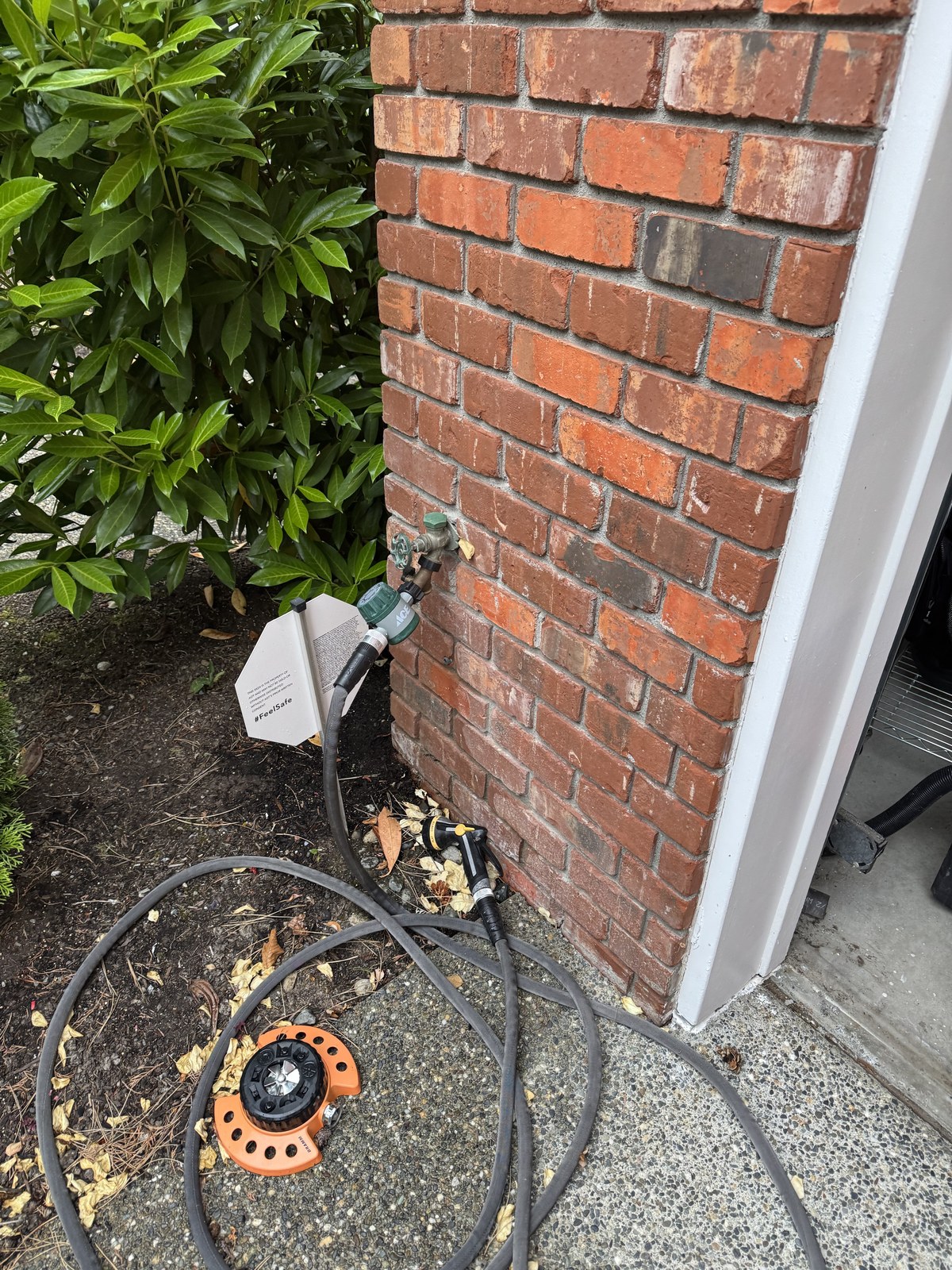
Usually somewhere nobody looks: a running toilet, a hose bib dripping outside, or a line leaking under the house. In Harbour Pointe this summer, Chase traced a climbing water bill to a front hose bib dripping where nobody walked. A quiet toilet dye test and a look at every outdoor faucet come first.
Is a wet crawl space a plumbing leak?
Sometimes. Groundwater and condensation wet a crawl space too, but water that appears only when fixtures run, or wet insulation under the kitchen or a bathroom, points at plumbing. In Everett this year we rebuilt a crawl-space waste line leaking at an old cast-iron hub, and a kitchen drain that leaked behind the wall above it.
Can a leak inside a wall be fixed without tearing the wall apart?
Usually, with a small, planned opening. We find the leak first, then open just enough to reach it, often from the back of a cabinet or the unfinished side of a wall. In Everett this year Chase opened short sections of wall to replace a CPVC toilet stop that would not close and a leaking saddle valve.
How fast should I deal with a slow drip?
Soon. A drip under a sink or behind a toilet costs little to fix early, but it soaks cabinet floors, subfloors and trim over weeks and can rot framing and grow mold. If a cabinet floor is soft, trim is swollen or a stain keeps growing, the leak has been running a while. Shut the nearest valve and call.
Which shutoff should I close when a pipe starts leaking?
The closest one that stops the water: the angle stop under the sink or behind the toilet, then the valve on the water heater or the house’s main shutoff. Find the main before you need it, often where the water line enters the house or in the garage. Turn it fully, and if it will not close, call.
Our Recommendation
Learn where your main shutoff is and read the meter once with everything off, today. It takes ten minutes, and it tells you whether you have a hidden leak and how to stop the water if you ever do. If the meter moves, or water shows up only when a sink drains, call us and we will find it before we open anything.
Related: water leak repair · water leak repair in Everett · galvanized pipe in north Everett · a high water bill traced to a hose bib in Mukilteo
Need a Leak Found in Snohomish County
Call Stollwerck Plumbing & Sewer. We find and repair supply and drain leaks across Everett, Mukilteo and the rest of Snohomish County.