Looking for tankless installation service? Visit our tankless water heater services page →
Are tankless hot water heaters on your home improvement to-do list? Maybe they should be. Imagine waking up every day and experiencing an endless supply of hot water for your shower while the dishwasher runs — or being able to start a laundry cycle while simultaneously running your hot/cold hose bib outside to wash the dog.
Tankless water heaters are wall-mounted units that average just 17” wide × 28” tall × 13” deep, reclaiming a chunk of garage or utility-room real estate. Currently, both Puget Sound Energy and the IRS offer incentives that can total up to $550 in combined rebates and tax credits toward a new tankless install. By taking advantage of newer tankless technology, you’ll improve your Mukilteo home’s value AND its energy efficiency.
Sizing the Right Tankless
When choosing a tankless water heater, rely on the advice of our professional, licensed, and Navien-certified team. There are many factors to consider when selecting which tankless options are suitable for your home or business:
- How many bathrooms?
- How many water-using appliances?
- Do you have one fixture or appliance that demands a lot of hot water at once, like a soaking tub?
- Do you use your washing machine constantly — cotton diapers with twins, or a large family?
- Does your business have a particular machine that requires dedicated hot-water service?
- Are your gas lines sized to supply enough natural gas or propane to efficiently run the tankless?
- Do you have proper venting to exhaust the unit?
Why We Choose Navien
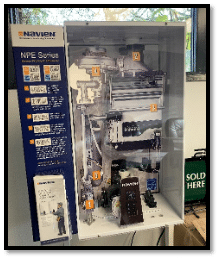
After years of installing, using, and servicing tankless water heaters from every major brand, we feel Navien delivers the best bang for your buck across performance, materials, reliability, warranty coverage, product support, and green technology. Navien has been perfecting tankless water-heater technology since 1978 and opened a US manufacturing plant in Virginia in 2020. Professionally installed and routinely maintained, your Navien unit should last 15 to 20 years or more. Patented venturi-fed dual burners, a built-in recirculating pump, wireless monitoring and adjustment options, and an easy app interface combine for a great everyday experience.
Why Gas Tankless Beats Electric in the PNW
Gas-powered tankless water heaters are super-efficient, on-demand little powerhouses of endless hot water — meaning you only heat water when you need it. Most tankless units are smart enough to predict use patterns to keep hot water ready. Even an insulated tank-style heater experiences standby heat loss, where the water stored in the tank loses some of its heat over time. Tankless eliminates that waste.
Why are electric tankless water heaters currently a limited practical-application option in the PNW? Three key factors:
- Groundwater temperature. Our average groundwater temp is 48–52°F. Compare that to 57–72°F in California. The energy required to heat water from Spada Lake to 120°F is much greater than for someone in San Francisco.
- Electric panel requirements. A whole-home electric tankless — for instance, a Steibel-Eltron Tempra 36, the largest residential model — requires 240V service and three 50-amp breakers per unit. The wiring gauge may need to be upgraded; the electrical panel may need an upgrade; sometimes the home’s electrical service itself needs an upgrade. If your usage requires more than one unit, those costs multiply.
- Flow rate. Today’s natural-gas-fueled tankless units are much more efficient at heating water at flow rate — or heating it faster — than an electric tankless in a whole-home setting. Electric tankless units take longer to heat the water to temperature, leading to fluctuations at the taps if you’re running more than one tap at once.
Energy Independence in the PNW
If we all converted to electric tankless, electric vehicles, electric furnaces, and electric appliances at once, demand on the regional power grid would balloon. We saw what happened in June 2021 — the heatwave caused Avista to schedule outages to manage AC demand, and PSE attributed additional outages to the high temps themselves. When the grid goes down, anything electric stops working: heat sources, cooking stoves, water heaters, water pumps, vehicles. A natural-gas or propane tankless keeps hot water flowing through a power outage and keeps a viable mix of fuel options in your home.
Credit: Washington State Department of Commerce.
The Path Forward
Where do we start preserving our planet while retaining a range of viable fuel options to keep our homes (and their water heaters) working efficiently? Forward-thinking building, renovation, and replacement practices ensure that insulation and venting in homes contribute to thermal savings. Manufacturers can develop products that use various fuel sources — hydrogen gas, electricity, propane, geothermal, natural gas — while also working on the byproducts of heating in those units. Battery banks are great for saving solar/wind/water generation, but they have their own inherent pollution from the metals and processes used in battery creation, plus limited green disposal methods. Ultimately, it takes a blend of manufacturers, energy resources, and battery technology firms developing products with greater fuel efficiency, plus consumers willing to pay the costs for that new technology.
Looking to make the move to a tankless hot water heater in Mukilteo? Contact Stollwerck Plumbing today — or visit our tankless water heater services page for more.